
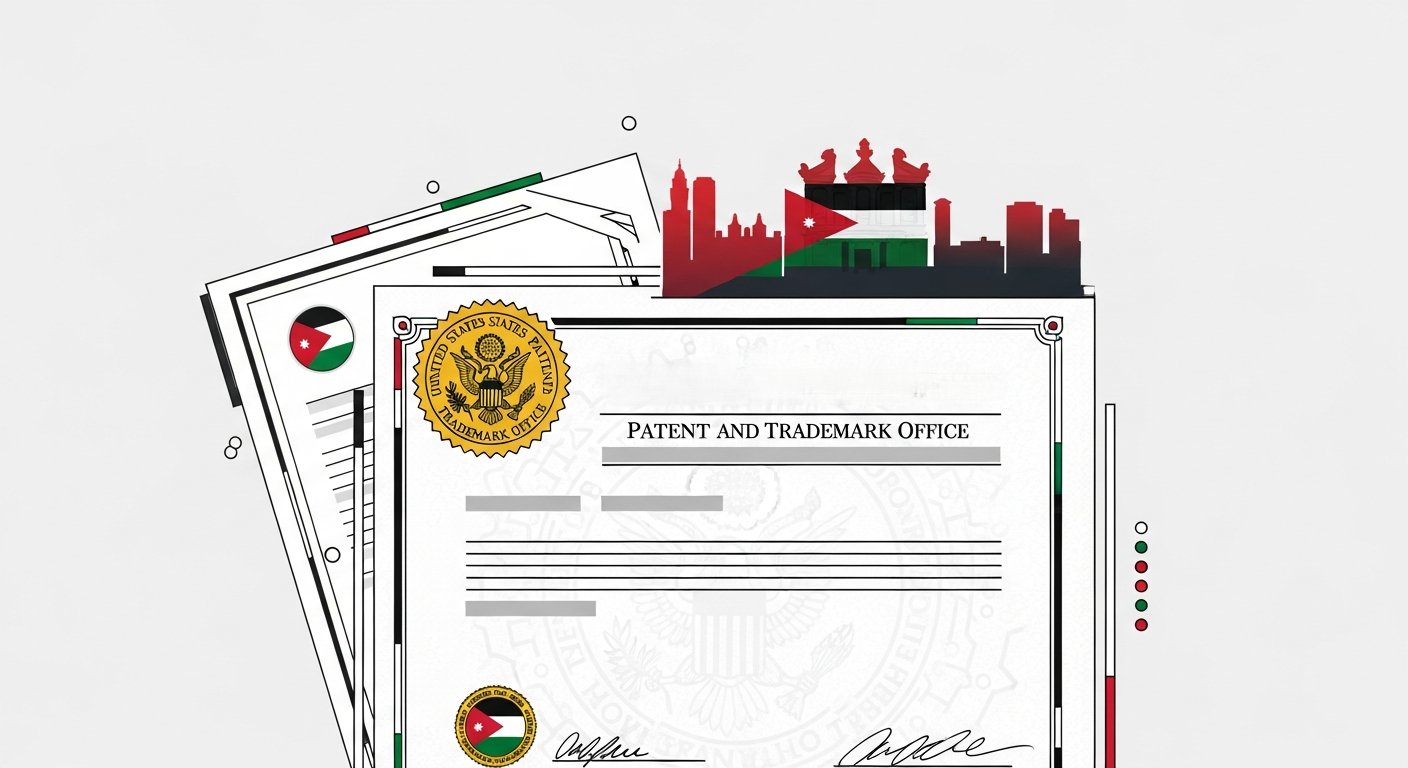
Legalizing USPTO Documents for Jordan: What You Need to Know
U.S. Intellectual Property (IP) documents such as USPTO trademark certificates, patent certificates, and assignments often need to be legalized before they can be used in the Hashemite Kingdom of Jordan. Whether you’re registering your brand, enforcing your rights, or supporting commercial activities in Jordan, proper legalization ensures your documents are accepted by government agencies, customs authorities, and courts.
This guide explains what USPTO documents are, why Jordan requires legalization, and the step-by-step process every business should follow.
What Are USPTO Documents?
The United States Patent and Trademark Office (USPTO) issues several types of intellectual property documents that may require legalization for use abroad.
1. Trademark Registration Certificates
These are official documents confirming that a trademark is:
Registered with the USPTO
Owned by the applicant
Protected under U.S. federal law
Businesses often legalize trademark certificates for:
Brand registration in Jordan
Distribution or franchise agreements
Customs enforcement
2. Patent Certificates
Patent certificates confirm patent ownership and grant the exclusive right to make, sell, or use the invention. Jordanian authorities may request legalized patents for:
Technology transfers
Licensing agreements
Product imports involving patented components
3. Assignment Documents
Assignments record the transfer of IP rights between entities. These frequently require legalization when:
A company restructures
Ownership is transferred abroad
Partnerships or JV agreements involve IP
Why Jordan Requires U.S. IP Documents to Be Legalized
Jordan does not accept U.S. documents at face value. To ensure authenticity, all USPTO documents used for:
Trademark or patent registration
Customs recordation
Corporate filings
Commercial agreements
must undergo the formal U.S.–Jordan authentication chain.
Legalization confirms that:
The USPTO issued the document
The U.S. Department of State authenticated it
The Jordanian Embassy/Consulate validated it for use in Jordan
This protects businesses from fraud and ensures legal recognition.
Step-by-Step: How to Legalize USPTO Documents for Jordan
Step 1 — Request a USPTO Certified Copy
Jordan requires certified copies, not simple downloads or printouts.
A USPTO certified copy includes:
An embossed or gold seal
An official signature
A certification statement
You can request certified copies for:
Trademark certificates
Patent certificates
Assignments and ownership records
⚠ Do not submit an electronic PDF from the USPTO website. Jordan will reject it.
Step 2 — Authenticate the Document at the U.S. Department of State
After obtaining the certified copy, the document must go through:
U.S. Department of State – Office of Authentication
They verify:
The USPTO official’s signature
The authenticity of the certification seal
Only after this step can the document be presented to the Jordanian Embassy.
Step 3 — Legalization by the Embassy of Jordan
The final stage is:
Jordanian Embassy in Washington, D.C.
orJordan Consulate (if jurisdiction applies)
The embassy:
Confirms U.S. State Department authentication
Adds its own legalization stamp
Approves the document for official use in Jordan
After this step, your document becomes fully valid for corporate, legal, and commercial use in Jordan.
Claimed vs. Certified Copies: What’s the Difference?
Only certified copies can move through the State Department and the Embassy.
Common Mistakes That Lead to Rejection
Businesses often lose weeks due to avoidable errors. The most common issues include:
Submitting un-certified USPTO PDFs
Using expired or outdated patent/trademark extracts
Sending documents without completing each step of the chain
Missing translations when Jordanian agencies later request Arabic versions
Not checking entity name consistency across corporate documents
Incorrect jurisdiction (using the wrong embassy/consulate)
Avoiding these mistakes prevents delays in brand registration, product shipping, or market entry.
Best Practices for Businesses Exporting Products or Enforcing IP Rights in Jordan
Use certified USPTO documents only
Plan ahead — legalization can take several weeks
Ensure your corporate documents match your IP owner name
Legalize related documents together (assignments, certificates, contracts)
Keep multiple legalized originals for ongoing filings in Jordan
Record your IP with Jordan Customs to prevent counterfeit imports
Align with distributors and partners on required paperwork
Businesses entering Jordan’s market—especially in cosmetics, tech, consumer goods, or pharmaceuticals—benefit from handling IP documents early to avoid customs or regulatory delays.
Final Checklist Before Submitting to the Jordan Embassy
USPTO certified copy (not electronic printout)
U.S. Department of State authentication
Embassy of Jordan legalization stamp
Corporate documents that match the IP owner’s name
Any supporting agreements (assignments, licenses)
Optional: certified Arabic translation (for local filings)